Thought Leadershiporiginal
Stepping Into the Word: How Interactive VR is Revolutionizing Biblical Literacy in 2026
10/19/2026
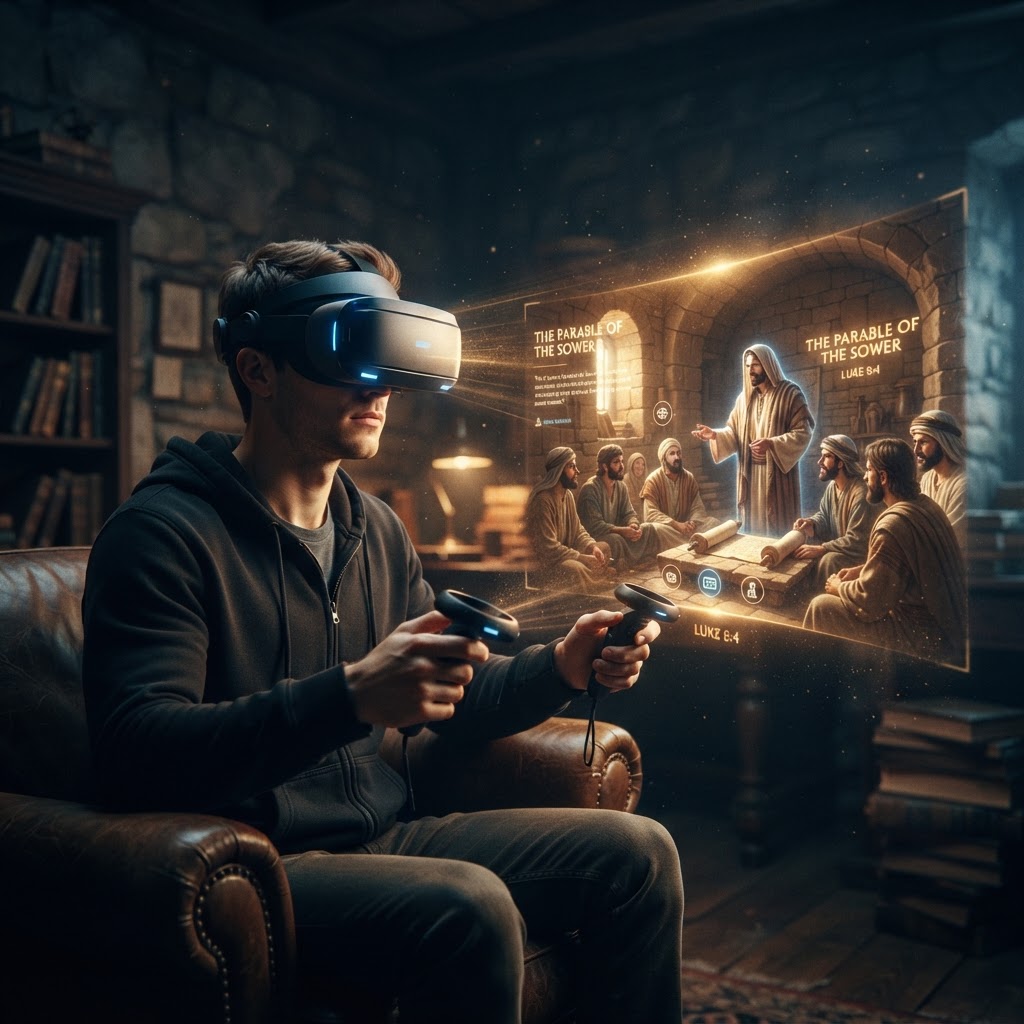
As we navigate the final quarter of 2026, the intersection of faith and technology has reached a profound milestone. For centuries, biblical literacy has relied primarily on the written word and static imagery. While these methods remain the cornerstone of our faith, the modern believer now finds themselves in a unique position where immersive technology allows us to bridge the gap between ancient history and contemporary experience. Building biblical literacy is no longer just about reading a text; it is about inhabiting the narratives that have shaped the human story.
In recent years, the challenge of engaging younger generations—and indeed, curious believers of all ages—with the depth of Scripture has become increasingly apparent. Distraction is the hallmark of the digital age. Yet, research from 2026 suggests that when learners transition from passive observation to active participation, retention and emotional resonance increase dramatically. This is where the power of virtual reality (VR) truly shines. By stepping into the shoes of biblical figures, we move beyond intellectual assent to a visceral, empathetic understanding of the challenges, fears, and triumphs found in the Word of God.
Consider the story of Jonah. Reading the text tells us of his reluctance, his journey through the storm, and his eventual repentance in the belly of the great fish. But to stand in a VR environment, feeling the scale of the sea and the isolation of the dark, creates a tactile connection to the narrative. This is exactly why we developed ZionSphere. Our vision was to create a space where believers could move past the 'Sunday School' summaries and dive deep into the texture of the Holy Land. When you see the dust kicked up in the Valley of Elah or hear the wind rushing past the ship to Tarshish, the Bible ceases to be a distant historical document and becomes a lived reality.
Biblical literacy is about more than just memorizing verses; it is about grasping the context of the covenant, the geography of the prophets, and the reality of the incarnation. When we engage with these stories interactively, we are practicing a form of modern-day pilgrimage. In 2026, we have the tools to ensure that these biblical accounts are not forgotten or relegated to the margins of our busy lives. Instead, we can integrate them into our daily rhythms through thoughtful, faith-driven technology.
From a theological perspective, this is not about replacing the Bible; it is about augmenting our capacity to meditate upon it. The psalmist tells us to 'hide Your word in my heart.' Sometimes, a vivid mental or virtual recreation of a scene helps us fix our eyes on the truth more effectively than a hurried reading ever could. By interacting with the environment—perhaps choosing to walk the path of David as he approaches Goliath or standing beside the disciples in the upper room—we are forced to ask deeper questions. What were they feeling? What was the cultural weight of that decision? These questions drive the heart of biblical literacy.
As we look toward the remainder of this year and into 2027, the potential for faith tech to act as a catalyst for spiritual growth is immense. We are no longer limited by the two-dimensional nature of a page. We are invited to 'come and see.' Whether you are a parent looking to ground your children in the faith or an individual seeking a fresh encounter with the familiar, the call to engage with Scripture has never been more vibrant. Technology, when placed in the hands of believers, serves as a bridge, not a barrier.
It is vital, however, to ensure that these experiences are anchored in truth. ZionSphere was built by believers for believers, because we believe that the holiness of the text demands excellence, reverence, and theological integrity. We are not just creating 'games'; we are creating spaces for encounter. As we continue to refine these experiences, our prayer is that the digital realm becomes a place where the Word is honored, studied, and brought to life in ways that move the soul and sharpen the mind.
If you have felt that your study of the Bible has grown stagnant, perhaps it is time to change your perspective. By leveraging the tools at our disposal in 2026, we can invite the Holy Spirit to illuminate the ancient texts through new lenses. The goal remains the same as it has been for millennia: to know Christ more deeply and to understand His story so that we might walk more faithfully in our own. Explore how you can deepen your biblical literacy through an immersive experience by visiting us at zionsphere.world today.
This article was brought to you by ZionSphere, a virtual faith experience. Connect with us at www.zionsphere.world.
Keywords
biblical literacyChristian gamingfaith techbiblical VRvirtual reality BibleZionSpherescripture studyinteractive faithChristian technology 2026
Stay in the Loop
Get the latest ZionSphere news and articles delivered to your inbox.